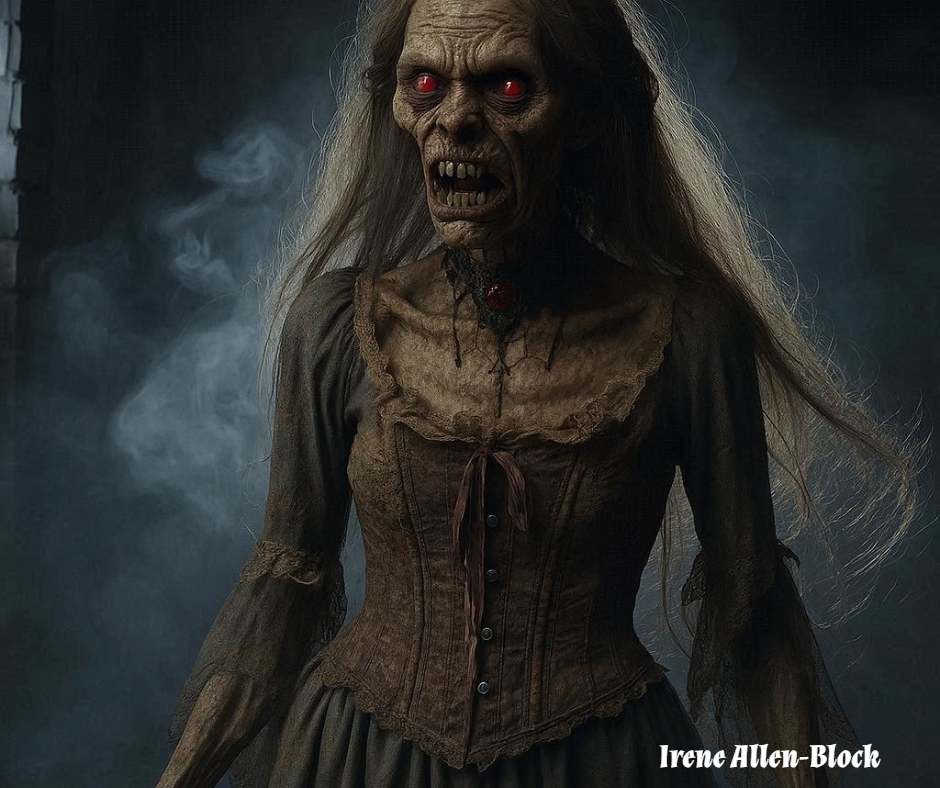
In 1954, the Gorbals district of Glasgow became the unlikely setting for one of the most fascinating episodes of modern urban folklore: the hunt for the so‑called Gorbals Vampire. What began as a rumour among schoolchildren quickly escalated into a full‑scale moral panic, drawing attention from parents, police, politicians, and the press. Although no vampire ever existed, the event reveals how fear, imagination, and social conditions can combine to create a legend powerful enough to spill into the real world.
The Gorbals of the mid‑twentieth century was a densely populated, working‑class neighbourhood marked by poverty, overcrowded housing, and limited recreational outlets for children. Against this backdrop, stories spread easily, especially among young people seeking excitement or escape. The legend that emerged described a monstrous figure haunting the Southern Necropolis, a sprawling Victorian graveyard already steeped in local superstition. According to the children, the creature was seven feet tall, possessed iron teeth, and had already killed and eaten two boys. The details were vivid enough to ignite fear, yet fantastical enough to capture the imagination.
The turning point came one autumn evening when hundreds of children, some armed with sticks, knives, or makeshift weapons, gathered at the gates of the Southern Necropolis to hunt the vampire itself. Their determination was extraordinary. They climbed the iron railings, lit fires for visibility, and searched the tombs with a seriousness that startled the adults who tried to intervene. Police officers arriving on the scene found themselves facing not a criminal threat, but a mass of children united by a shared belief in a creature that had never been seen by any adult. The scale of the gathering was unprecedented, and it demonstrated the power of collective imagination to override logic and authority.
In the aftermath, adults sought explanations for how such a rumour could take hold so completely. Many pointed to the growing popularity of imported American horror comics, which often featured grotesque monsters and sensational storylines. These comics were inexpensive, visually striking, and widely circulated among children. Critics argued that such material encouraged morbid fantasies and blurred the line between fiction and reality. The panic surrounding the Gorbals Vampire contributed directly to the passing of the Children and Young Persons (Harmful Publications) Act of 1955, which restricted the sale of horror comics in the United Kingdom. Whether or not the comics were truly responsible, they became a convenient symbol of adult anxieties about youth culture and media influence.
Yet the legend cannot be explained solely through the lens of comic‑book panic. The Gorbals Vampire also reflects deeper cultural patterns. Folklore has long served as a way for communities to express fears, negotiate social tensions, and make sense of the unknown. In a neighbourhood where danger and hardship were part of daily life, the idea of a supernatural threat may have offered a strangely empowering narrative, one in which children could take action, defend their community, and confront a monster that embodied their anxieties. The vampire became a vessel for fears that were real, even if the creature itself was not.
Today, the Gorbals Vampire is remembered not as a genuine supernatural encounter but as a remarkable example of how myths can take root in modern society. It stands at the intersection of folklore, psychology, and social history, illustrating how stories can shape behaviour and how communities respond to perceived threats. The event remains a testament to the imaginative power of children and the enduring human tendency to create monsters that reflect our own uncertainties.
In the end, the Gorbals Vampire was never found because it never existed. But the legend it inspired continues to echo through Glasgow’s history, reminding us that sometimes the most compelling stories are those born not from fact, but from fear, imagination, and the shared belief of a community searching for meaning.
Irene Allen-Block.
Leave a Reply