Irish folklore is rich with supernatural beings, omens, and otherworldly encounters that reflect the island’s long-standing relationship with myth and mystery. Among these figures, the Fetch stands out as one of the most haunting and psychologically intriguing. Often described as a spectral double of a living person, the Fetch occupies a unique place in Ireland’s cultural imagination, blending themes of identity, mortality, and fate. Its presence in folklore reveals not only the Irish fascination with the supernatural but also deeper anxieties about life’s fragility and the thin boundary between the physical and spiritual worlds.
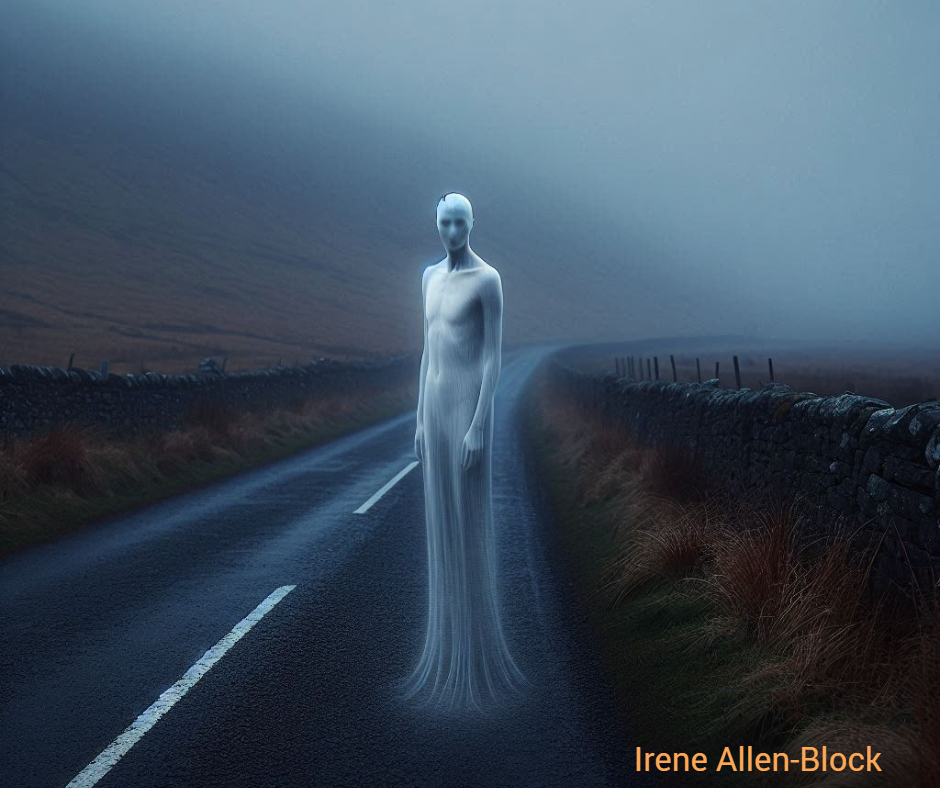
At its core, the Fetch is understood as a ghostly duplicate, a perfect likeness of someone who is still alive. Unlike traditional ghosts, which are spirits of the dead, the Fetch appears while its counterpart continues to walk the earth. This inversion of the expected order is part of what makes the Fetch so unsettling. It is not a remnant of the past but a shadow of the present, a reminder that the supernatural can intrude upon ordinary life without warning. The Fetch might be seen walking along a familiar road, entering a home, or standing silently in a doorway, its presence marked not by violence or malice but by eerie stillness.
The meaning of a Fetch sighting varies across Ireland, but it is most commonly interpreted as an omen. In many traditions, encountering one’s own Fetch, especially in the evening, is believed to foretell imminent death. This belief aligns with a broader Irish tradition of death portents, such as the wail of the banshee or the appearance of a corpse light. Yet the Fetch differs in that it mirrors the living person exactly, suggesting a symbolic connection between the individual and their fate. The idea that one might meet a version of oneself at the threshold of death taps into a universal fear: the confrontation with one’s own mortality.
Interestingly, not all interpretations of the Fetch are grim. Some accounts claim that seeing a Fetch in the morning is a sign of longevity or good fortune, though this more optimistic reading is far less common. The dual nature of the Fetch, as both a potential blessing and a curse, reflects the ambiguity often found in Irish folklore, where supernatural encounters can be protective, dangerous, or simply mysterious. This ambiguity allows the Fetch to serve multiple narrative purposes, from warning characters in old tales to symbolising inner turmoil or impending change.
The origins of the Fetch concept are difficult to trace with certainty, but linguistic clues suggest connections to old Irish words related to prophecy or apparitions. This etymological uncertainty mirrors the elusive nature of the creature itself. What is clear, however, is that the Fetch belongs to a broader family of “double” myths found across cultures. Germanic folklore speaks of the doppelgänger, a similarly ominous double, while Norse tradition includes the vardøger, a spiritual forerunner that appears before a person arrives. The Irish Fetch, however, retains its own distinct character, shaped by Ireland’s unique blend of pagan mythology, Christian belief, and centuries of storytelling.
What makes the Fetch particularly compelling is its psychological dimension. Unlike monsters or fairies that exist outside the self, the Fetch reflects the individual. It forces the witness to confront a version of themselves that is both familiar and alien. In this way, the Fetch can be interpreted not only as a supernatural omen but also as a symbolic representation of self-awareness, fear, or transformation. The idea of meeting one’s double resonates deeply because it challenges the boundaries of identity. It suggests that the self is not fixed but shadowed by possibilities, some hopeful, others terrifying.
In conclusion, the Fetch remains one of the most evocative figures in Irish folklore. Its appearance as a living person’s spectral double captures the tension between the natural and supernatural, the known and unknown. Whether viewed as a harbinger of death, a symbol of change, or a reflection of inner fears, the Fetch continues to fascinate because it speaks to universal human concerns. It reminds us that even in the most ordinary moments, the extraordinary may be waiting just beyond the edge of perception, silently mirroring our steps.
Irene Allen-Block
Leave a Reply